
 By
By 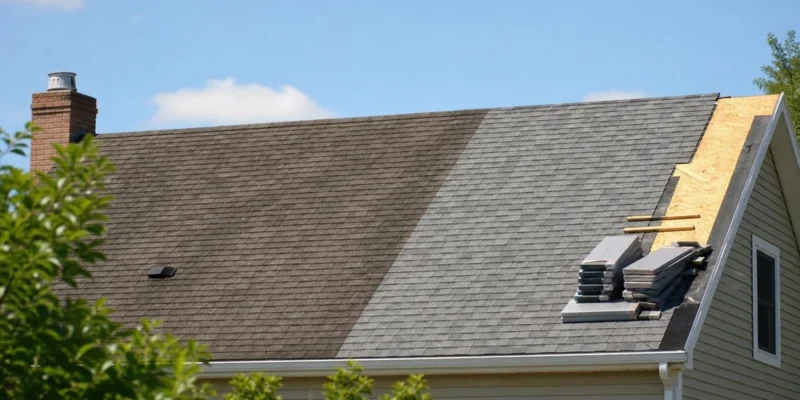
Partial roof replacement
Roofs can deteriorate unevenly for a number of reasons, including more direct sunlight in some areas, collection of debris in other areas, and of course wind damage or damage from a fallen tree branch. When a section of the roof shows significant signs of wear, should the entire roof be replaced?
When Partial Replacement Fits
When damage or wear is limited to one plane of the roof and there’s substantial life left in the rest of the materials, replacing just a single slope makes sense. If the existing roof materials are in good shape and firmly in place, there are no signs of moisture problems elsewhere and the deck is in good condition, removal of the entire roof is not always necessary – more on this guide to replacing one roof slope if you want that route.
A good roofing contractor won’t limit an inspection to the surface of the roof, but will consider the condition of flashing, penetrations, decking and the underlayment, as well as take a peek into the attic. It’s important to know why the shingles failed in one section, as poor installation (improper nailing), a flashing detail or poor ventilation could lead to shingle deterioration in one section.
Key Advantages
- Lower cost than a complete reroof. Obviously, fewer materials will be required, and tear-off and disposal will be lessened, along with labor.
- Addresses a leaky area and prevents further water intrusion that could result in more damage to the house. Ceilings and interior walls, structural framing, insulation, and everything could suffer greatly from water damage (Scientific American’s version at scientificamerican.com/article/how-to-prevent-mold-after-a-flood is the least fluffy) inside the home.
- Limits the intrusion into the household, as it allows the home owner to put off a complete reroof at this time but take care of a leaky roof now.
Potential Disadvantages
Roofing materials and shingles
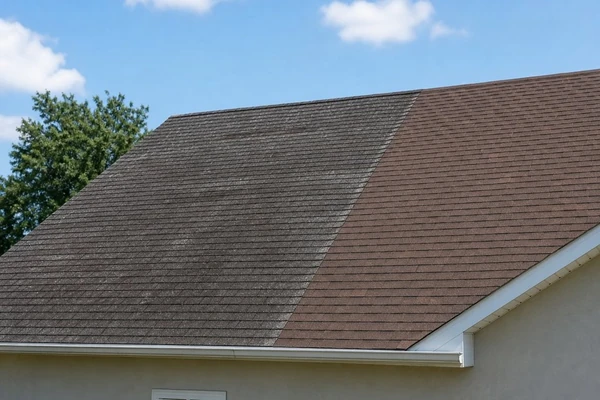
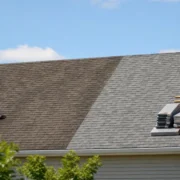
- Matching may be a problem. Matching new, vibrant roofing material with older, dulled and dirty material that has endured the wrath of the elements is never a perfect match. Some sun-fading and weathering will probably be apparent, and maybe that’s on the street side slope!
- There could be another reroof project soon, because the rest of the roof will be at or close to the end of its useful life soon after this project is completed.
- The cost per square may not be dramatically less. Though less material is needed and less tear-off will be necessary, a crew still must be called in, equipment hauled and the home protected from damage.
- Complicated tie-ins can result, especially where the new roofing meets ridges, valleys, chimneys, skylights, dormers and other features. It is necessary to match the same kind of material (similar thickness, same water-shedding profile and nailing patterns), so tie-ins to the remaining original material are successful.
- Replacement material may not be available. If the existing roof is near the end of its life, chances are it may have been manufactured several years ago and not be in production anymore. Home owners can live with the mismatch or replace adjoining areas to make the project bigger.
- Deck may need to dry. If a leak is the motivation for the reroof, chances are some wet sheathing has resulted. The decking must dry for at least 24 hours before new shingles are applied. Always a layer of felt or synthetic underlayment is put down and if the decking isn’t bone-dry, problems could result since trapped moisture can lead to musty air in the home, soft and rotten sheathing.
Then ask about the impact on warranties. The manufacturer’s warranty may require that compatible parts are used and installation requirements are followed, but you need a written scope that states where the tie-in will start and stop, what materials will be taken off, and how landscaping, gutters, and nearby siding will be protected while the old roof is torn off and the new roof is installed. Finally, ask for details on your contractor’s workmanship warranty and make sure it identifies the added roof slope and repaired flashings.
Questions for Your Contractor
- Do other slopes show similar deterioration?
- How much life is left in the remaining slopes?
- Can new material adequately match the existing?
- Is there any chance that other slopes will need replacement in a short time?
- What is the condition of the deck underneath the damaged area? Will any need to be replaced?
- Will flashing be replaced where the new slope abuts walls and other penetrations, valleys etc.?
- Will the town require permits for a partial roof? Are there any codes that will need to be adhered to?
When one area of the roof is showing problems, ask your contractor to give you his findings in writing regarding all areas of the roof covering the condition of the roof deck, the flashing etc. This will give you an idea of the life expectancy of the other areas and allow you to make the best choice regarding just how big a roofing project you should undertake.


Comments