
 By
By 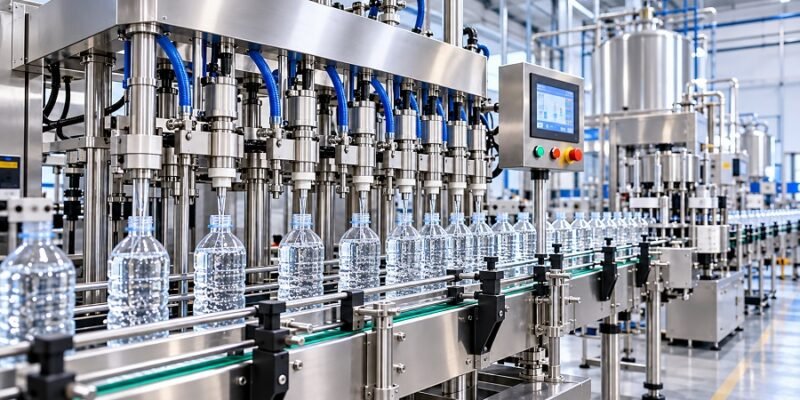
Choosing an industrial liquid filling system is an important decision for any manufacturer investing in a new bottling or packaging operation. The filling machine sits at the heart of the packaging process, so its performance can directly affect production speed, filling accuracy, product waste, labor requirements, and the overall efficiency of the line.
However, selecting a filling machine should not simply come down to comparing prices or choosing the machine with the highest advertised output. Different liquids behave differently during filling, and factors such as viscosity, foaming, temperature, container design, required accuracy, production volume, automation, and cleaning requirements all need to be considered.
For manufacturers planning a new project or upgrading an existing facility, the right approach is to look at the complete production requirement and then select equipment around it.
With more than 12 years of experience in liquid packaging, Mejo Pack provides turnkey bottling solutions designed around the specific needs of global customers. From individual filling equipment to complete production lines, the objective is to create a reliable packaging process that works efficiently from the first stage through final packaging.
1. Understand the Characteristics of Your Liquid
The first question to ask when selecting an industrial liquid filling system is simple: What exactly are you filling?
A machine designed for low-viscosity water may not be the right choice for cooking oil, detergent, shampoo, sauce, or another thicker product. The physical behavior of the liquid influences the filling principle, pump configuration, nozzle design, filling speed, and achievable accuracy.
Viscosity
Viscosity describes how easily a liquid flows. Water-like products generally move quickly and easily through filling equipment, while products with higher viscosity require more controlled product movement.
For example:
- Bottled water generally has very different filling characteristics from edible oil.
- Detergent can behave differently from a low-viscosity beverage.
- Shampoo and cosmetic liquids may require more controlled filling.
- Sauces or other thick products may require positive-displacement filling technology.
A manufacturer should provide accurate product information to the equipment supplier before selecting the machine. If possible, product samples and technical specifications can make the engineering process much more precise.
Foaming, Temperature and Particles
Viscosity is not the only consideration. Some liquids foam during filling, while others may contain suspended particles or change viscosity as temperature changes.
These characteristics can affect:
- Nozzle configuration
- Filling speed
- Pump selection
- Product handling
- Cleaning requirements
- Filling accuracy
The best filling system is therefore one that has been selected around the actual product rather than simply around the product category.
2. Choose the Right Filling Technology
There is no single filling method that is ideal for every liquid. The appropriate technology depends on the product, container, required accuracy, production volume, and other operating conditions.
Common filling approaches include:
| Filling Technology | Typical Application | Main Consideration |
|---|---|---|
| Gravity filling | Thin, free-flowing liquids | Simple product flow |
| Overflow filling | Products where consistent bottle levels are important | Visual fill-level uniformity |
| Piston filling | Medium- to high-viscosity products | Controlled volumetric dosing |
| Pump-based filling | Various liquid products | Flexible product delivery |
| Flow-meter filling | Applications requiring controlled liquid measurement | Precise flow monitoring |
| Weight-based filling | Products requiring quantity by mass | Direct measurement of filled weight |
The correct choice depends on the application. A manufacturer should also consider whether the equipment needs to accommodate one product or several different formulations.
Selecting the wrong filling principle can lead to problems such as inconsistent fills, excessive dripping, foaming, slow production, difficult cleaning, or unnecessary product loss.
3. Consider Filling Accuracy
Filling accuracy is one of the most important factors when evaluating a liquid filling system.
Every container needs to receive the intended quantity within the required tolerance. If the machine consistently overfills containers, the manufacturer may give away product. If it underfills, the result can be inconsistent packaging and potential quality or compliance concerns.
Accuracy becomes particularly important when:
- The product has a relatively high value.
- Production volumes are large.
- Containers have a declared fill quantity.
- Multiple filling heads operate simultaneously.
- The manufacturer produces several different fill volumes.
It is useful to discuss not only the machine’s advertised accuracy but also how accuracy is maintained during actual production.
Questions worth asking include:
- How is filling volume adjusted?
- How is the machine calibrated?
- How does the system respond to changes in production conditions?
- Can different filling volumes be stored as recipes?
- How easy is it to verify filling performance?
The goal is not simply to achieve accuracy during a factory test. The system should maintain consistent performance throughout normal production.
4. Match Production Capacity to Your Business Goals
A filling machine should be sized around realistic production requirements.
Start by calculating the required output in bottles per minute or bottles per hour. Then consider the bottle size, number of shifts, expected operating time, product changeovers, cleaning periods, and future growth.
A useful production assessment includes:
- Target bottles per hour
- Bottle volume
- Number of filling heads
- Number of operating shifts
- Required production days
- Expected downtime
- Product changeover frequency
- Future production targets
Maximum machine speed is not always the same as practical production output. A line may need to slow down because of bottle handling, capping, labeling, product characteristics, or downstream packaging equipment.
For growing manufacturers, it can therefore make sense to consider Filling Production Lines as a complete system rather than evaluating the filler in isolation.
5. Evaluate Bottle Size, Shape and Material
The container is another major part of the selection process.
A filling machine needs to work reliably with the bottles or containers used in production. Differences in diameter, height, neck size, shape, and material can affect bottle handling and filling-head configuration.
Common packaging materials include:
- PET
- HDPE
- Glass
- Other plastic containers
- Specialty industrial containers
If a manufacturer plans to use multiple bottle sizes, the machine should be designed with changeover and adjustment requirements in mind.
It is also important to consider what happens before and after filling. Bottle handling, rinsing, filling, capping, labeling, coding, and packaging need to work together as one coordinated process.
6. Decide How Much Automation You Need
Automation can significantly change the way a production line operates.
Modern filling systems can incorporate PLC controls, touchscreen interfaces, sensors, automatic bottle detection, recipe management, conveyor controls, and other automated functions.
Depending on the application, useful features may include:
- No-bottle/no-fill protection
- Automatic bottle positioning
- Digital filling-volume adjustment
- Recipe storage
- Production monitoring
- Fault alarms
- Automatic conveyor control
- Integration with capping and labeling equipment
Automation is not simply about reducing the number of operators. It can also improve repeatability and make it easier to monitor the production process.
The appropriate level of automation depends on production volume, labor availability, budget, product range, and future expansion plans.
7. Give Hygiene and Cleaning Proper Attention
For food, beverage and other hygiene-sensitive applications, equipment design and cleaning should be considered from the beginning of the project.
Product-contact components need to be appropriate for the liquid being processed and designed to support effective cleaning. Areas that are difficult to access can make maintenance and sanitation more complicated.
When evaluating equipment, ask about:
- Product-contact materials
- Surface finish
- Accessibility
- Drainage
- Cleaning procedures
- Cleaning-in-place requirements where applicable
- Preventive maintenance
- Replacement of seals and other wear components
A good system should make routine cleaning practical rather than treating sanitation as an afterthought.
This is particularly important for manufacturers handling different products on the same equipment. A well-planned cleaning and changeover procedure helps reduce the risk of product carryover and unnecessary downtime.
8. Check Material Compatibility
Liquid characteristics can also determine which materials should be used in the product-contact path.
Water, beverages, oils, detergents, cleaning chemicals, and other formulations can have very different chemical properties.
Depending on the application, manufacturers may need to evaluate:
- Stainless-steel components
- Pumps
- Valves
- Tubing
- Seals
- Gaskets
- Nozzles
- Product-contact fittings
For chemical or aggressive products, corrosion resistance can become especially important.
The material selection should therefore be based on the actual product and cleaning chemicals used in the factory, rather than relying on a generic machine specification.
9. Look at Changeover and Production Flexibility
Many modern manufacturers do not produce only one product in one bottle size.
A packaging facility may need to handle different:
- Products
- Bottle volumes
- Container shapes
- Filling quantities
- Labels
- Production batches
This makes changeover time an important consideration.
A system with practical adjustment features and easily managed settings can help reduce production interruptions. Recipe management can also be useful when the same equipment is used for several products or filling volumes.
When comparing machines, ask how long a typical changeover takes and which components need to be adjusted or replaced.
The most productive machine is not necessarily the one with the highest theoretical speed. In a multi-product factory, flexibility can have a major effect on real production efficiency.
10. Think About the Complete Production Line
One of the most common mistakes when planning a packaging project is focusing too heavily on the filling machine itself.
In a complete bottling operation, the filler is only one part of the process.
A typical liquid packaging line may include:
Water treatment → bottle blowing or bottle feeding → rinsing → filling → capping → labeling → coding → inspection → secondary packaging → conveying
Every stage needs to work together.
For example, installing a high-speed filler does not automatically increase total production if the labeling machine, capper, bottle unscrambler, or packaging equipment cannot match its output.
This is where a turnkey engineering approach can be valuable. Instead of purchasing individual machines and attempting to integrate them afterward, manufacturers can plan the complete line around production requirements, available space, utilities, bottle specifications, and target output.
For water and beverage projects, Industrial Water Treatment Systems can also form an important part of the upstream production process, particularly when the project involves complete bottled-water production.
11. Evaluate the Supplier’s Engineering and After-Sales Support
A filling machine is a long-term production asset, so the equipment supplier matters almost as much as the equipment itself.
Before placing an order, manufacturers should ask:
- Does the supplier understand the product?
- Can the supplier recommend the appropriate filling technology?
- Can the supplier design a complete line?
- Is factory testing available?
- Does the supplier provide installation support?
- Is operator training included?
- How are spare parts handled?
- What technical support is available after installation?
- Can the supplier support international projects?
A strong supplier should be able to discuss the application in practical terms rather than simply providing a standard machine quotation.
Mejo Pack has more than 12 years of experience in liquid packaging and focuses on turnkey bottling solutions for global customers. Its approach covers complete production-line planning as well as individual packaging equipment, helping manufacturers coordinate different stages of the bottling process.
12. Compare Total Cost of Ownership
The initial purchase price is important, but it should not be the only number considered.
Two filling machines with similar purchase prices can have very different operating costs over several years.
When comparing equipment, consider:
- Labor requirements
- Energy consumption
- Product loss
- Maintenance
- Spare parts
- Downtime
- Cleaning time
- Changeover time
- Production capacity
- Equipment durability
- Future expansion
For example, a small difference in product overfill may appear insignificant on an individual bottle. Across hundreds of thousands or millions of bottles, however, even a small amount of unnecessary product can become a meaningful operating expense.
The better approach is to evaluate the machine according to its expected contribution to the entire production process.
Industrial Liquid Filling System Selection Checklist
Before requesting a quotation, prepare the following information:
- Product: What liquid will be filled?
- Viscosity: Is the product thin, medium, or highly viscous?
- Foaming: Does the liquid foam during filling?
- Temperature: Is the product filled at ambient or controlled temperature?
- Particles: Does the liquid contain solids or suspended material?
- Bottle: What are the bottle dimensions and material?
- Fill volume: What quantity needs to be filled?
- Accuracy: What filling tolerance is required?
- Capacity: How many bottles per hour are required?
- Automation: What level of automation is expected?
- Products: Will one machine handle multiple products?
- Bottle sizes: Will several container formats be used?
- Cleaning: What cleaning process is required?
- Space: What factory area is available?
- Utilities: What electrical, air, water, and other utilities are available?
- Future growth: Will production capacity increase later?
- Support: What installation, training and after-sales services are needed?
Having these details ready can make discussions with equipment manufacturers much more productive.
Why an Experienced Turnkey Packaging Partner Matters
Selecting an industrial liquid filling system is ultimately an engineering decision rather than a simple equipment purchase.
The right system needs to match the product, container, filling volume, accuracy requirements, production target, automation level, cleaning process, and future business plans.
For manufacturers building a new facility, a complete turnkey approach can also simplify project coordination by bringing filling, conveying, capping, labeling, packaging, and related systems together under one production strategy.
Mejo Pack has more than 12 years of experience in liquid packaging and provides turnkey bottling solutions for customers in global markets. Its capabilities cover applications including bottled water, beverages, beer and carbonated drinks, as well as chemical and oil packaging.
For manufacturers looking for Industrial Liquid Filling equipment and complete bottling solutions, the most useful starting point is a detailed discussion about the actual product and production requirements. Bottle drawings, product information, target capacity and desired automation level can help equipment engineers develop a more appropriate solution.
Frequently Asked Questions
How do I choose the right industrial liquid filling system?
Start with the liquid itself. Evaluate viscosity, foaming behavior, temperature, particles, filling volume, required accuracy, bottle specifications, production capacity, cleaning requirements and desired automation. The filling technology should then be selected according to these requirements.
What type of filling machine is suitable for high-viscosity liquids?
High-viscosity liquids often require controlled positive-displacement filling technologies, such as piston-based systems, although the appropriate solution depends on the specific product. Product testing is recommended before final equipment selection.
How does viscosity affect liquid filling?
Viscosity affects how quickly a product flows through pipes, pumps and nozzles. A machine designed for a thin liquid may not perform efficiently with a thick product. Viscosity should therefore be considered when selecting pumps, filling valves, nozzles and operating parameters.
What information should I provide to a filling machine manufacturer?
Provide the liquid type, viscosity, bottle drawings or samples, bottle material, fill volume, required production capacity, desired filling accuracy, number of products, bottle sizes, cleaning requirements and automation expectations.
Can one filling line handle multiple bottle sizes?
Yes, many filling systems can be configured for multiple bottle sizes. However, the practical changeover process depends on the machine design, bottle dimensions, filling volume and required production speed.
Why is turnkey integration important for a bottling line?
A complete bottling line contains multiple machines that must work together. Coordinating the filler, capper, labeler, conveyors, packaging equipment and other systems can help avoid bottlenecks and integration problems.
How can manufacturers reduce product waste during filling?
Appropriate filling technology, accurate volume control, proper machine adjustment and regular maintenance can all help reduce product giveaway. The filling system should be selected according to the product’s characteristics and required production conditions.
Conclusion
Choosing an industrial liquid filling system requires more than comparing machine specifications or purchase prices. The most important factors include liquid characteristics, filling technology, accuracy, production capacity, container design, automation, hygiene, material compatibility, flexibility, complete-line integration and after-sales support.
By evaluating these factors before purchasing equipment, manufacturers can make a more informed investment and build a filling process suited to their actual production needs.
For companies planning a new bottling facility, expanding production, or replacing existing equipment, working with an experienced turnkey packaging provider can also make the engineering and integration process more straightforward.
Mejo Pack combines liquid packaging experience with turnkey production-line capabilities to help manufacturers develop practical filling and bottling solutions around their specific products, containers and production goals.










Comments