
 By
By 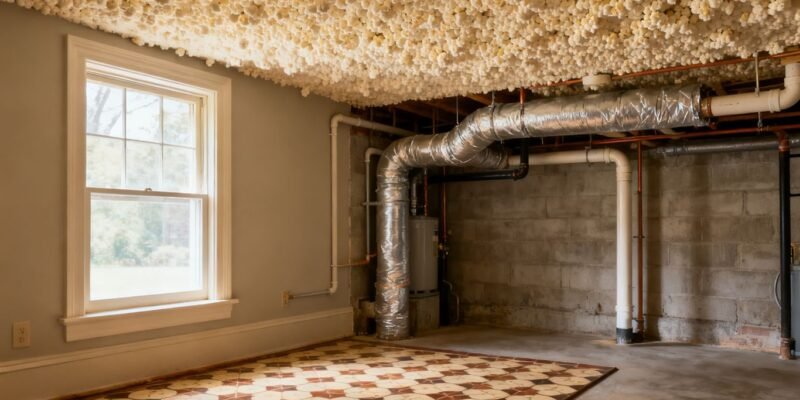
Asbestos was valued for its resistance to heat, fire, and wear, so it became part of many building products before its dangers were widely understood. Older houses may contain it in places that are easy to overlook, even after years of repair and repainting. Understanding these common household asbestos sources helps homeowners pause before maintenance turns into exposure.
How asbestos was used in residential construction
Manufacturers mixed asbestos fibers into insulation, cement products, flooring, ceiling textures, adhesives, and other materials. The fibers could add strength, improve heat resistance, or help a product withstand fire. A broad overview of common asbestos-containing products can help explain why asbestos is not limited to one room or one type of construction.
Which home ages and renovations deserve extra caution
Homes built or renovated before the 1980s deserve particular care, although the construction date alone cannot confirm whether asbestos is present. Materials installed during later remodeling may also remain from an earlier project, especially beneath newer floors or behind replacement walls. Records, permits, and renovation invoices can provide useful clues, but they do not replace testing.
Why asbestos can remain a hazard decades later
Asbestos does not simply disappear because a house becomes older. A material may remain in place for decades and pose little immediate risk when intact, yet become more concerning as it crumbles, wears, or is cut during repairs. The guide to asbestos in the home explains why condition and disturbance matter as much as age.
How asbestos exposure occurs through damaged or disturbed materials
Exposure generally becomes possible when fibers escape from damaged or disturbed material and enter the air. Drilling, sanding, scraping, demolition, and some repair work can create that disturbance, particularly when a product is friable or deteriorating. Dust should therefore be treated cautiously rather than swept away as ordinary renovation debris.
Popcorn ceilings and other ceiling materials
Textured ceilings are among the household features that often prompt asbestos questions. A stippled finish may be original, added during a remodel, or covered by later paint, making its history difficult to read from the room below. The safest approach is to treat an uncertain ceiling as a material requiring assessment before any cosmetic update.
When textured ceilings may contain asbestos
Some older acoustic or popcorn ceiling coatings may contain asbestos, but texture alone is not proof. Similar-looking products were made with different ingredients, and paint can obscure their original appearance. Homeowners should avoid scraping a small area “just to see what is underneath,” since that test can create the very dust they are trying to understand.
How ceiling tiles, panels, and joint compounds can differ
Ceiling tiles, suspended panels, sprayed textures, and joint compounds are separate material categories and may have different histories. Asbestos can also occur in patching or finishing compounds rather than in the visible ceiling surface itself. This is why an inspection should consider the full assembly, including seams, repairs, backing, and adjacent materials.
Why scraping, sanding, or drilling can release fibers
Scraping can break a textured coating into chips and dust, while sanding reduces the material to fine particles. Drilling for lights, vents, shelves, or wiring can disturb both the surface and hidden layers around it. Even a small project can spread dust beyond the immediate work area if it is performed without appropriate controls.
Safer ways to assess and update textured ceilings
Before painting, cutting, or removing a textured ceiling, the homeowner can stop work and arrange a professional assessment. If an update is necessary, the appropriate response may involve leaving the surface alone, enclosing it, or having it handled by qualified personnel. A visual match with a photograph or neighboring room is not a reliable clearance method.
Pipe wrap, insulation, and heating system components
Heat-producing equipment and distribution systems historically used asbestos because it could tolerate high temperatures. In a basement, utility room, attic, or wall cavity, it may appear as a wrapping, board, tape, gasket, or insulation layer. These materials can be especially sensitive because maintenance often requires access to pipes, boilers, ducts, or furnaces.
Where asbestos insulation appears around pipes and boilers
Asbestos may be found around hot-water or steam pipes, elbows, valves, boilers, and connecting components. Pipe insulation can have a plaster-like outer coating, fabric wrap, or molded sections, and its condition may vary along the same run. A loose edge or cracked section should not be handled, taped, or removed casually.
How asbestos may be used in ductwork and furnace components
Older duct insulation, furnace insulation, heat shields, and gaskets may contain asbestos-related materials. These components can be hidden behind access panels or within mechanical spaces, where routine servicing brings workers close to them. Information about where asbestos may be found is useful background, but only a qualified assessment can determine what is actually present in a particular system.
Why damaged insulation requires immediate attention
Cracked, flaking, or water-damaged insulation can release material more readily than a sound, sealed surface. Air movement around mechanical equipment may also carry loose debris into nearby spaces. Occupants should keep clear of the area, avoid disturbing the debris, and arrange professional advice rather than attempting a quick cleanup.
What homeowners should know before repairs or removal
Replacing a boiler, opening a wall, or repairing a pipe can turn an overlooked insulation material into a worksite hazard. Contractors need to know about suspected asbestos before planning access, isolation, removal, or disposal. Work should be coordinated so that the mechanical repair does not begin until the material has been properly evaluated.
Floor tiles, adhesives, and other common household sources
Flooring is another frequent source of concern, particularly in kitchens, utility rooms, hallways, and older finished basements. New flooring can conceal earlier tiles or sheet material, while adhesive may remain bonded to the subfloor after the surface has been removed. The visible floor is therefore only part of the question.
How asbestos may occur in vinyl floor tiles and sheet flooring
Older vinyl or asphalt floor tiles, and some sheet-flooring backings, may contain asbestos. A cracked tile is not a reliable visual diagnosis, and intact flooring should not be pried up simply to inspect the layer beneath it. Replacement plans should account for both the flooring and any backing or underlayment that may be disturbed.
Why black mastic and other flooring adhesives matter
Dark flooring adhesive, often called black mastic, may remain after tiles or sheet flooring have been removed. Other adhesives and leveling compounds can also be part of the suspected material assembly. When several layers are present, a contractor must avoid assuming that removing the top layer has eliminated the concern.
A compact way to think through a flooring project is to ask what may be present at each layer:
- The visible tile, plank, or sheet surface
- Backing, underlayment, or paper layers
- Adhesive, mastic, or leveling compound
- The subfloor and nearby wall or trim materials
That layered view helps prevent a narrow inspection from missing material that the renovation will still disturb. It also gives an inspector clearer information about which samples or controls may be needed.
Where asbestos may appear in roofing, siding, and cement products
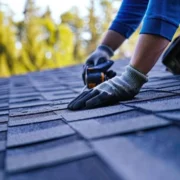
Asbestos-containing cement products have been used in some roofing, siding, shingles, and other exterior materials. Cutting, breaking, or power-washing an old product can create dust or fragments, even when the material appears sturdy. Exterior work still deserves planning because debris and dust can travel into soil, porches, windows, or occupied areas.
Less obvious sources in walls, doors, and electrical components
Less visible possibilities include wallboard joint compound, decorative plaster, window glazing, fire doors, electrical panels, and heat-resistant materials near stoves. These examples do not mean that every old component contains asbestos; they show why a room-by-room assumption can be misleading. The more useful question is whether planned work will disturb an unverified material.
How to identify suspected asbestos safely
Asbestos cannot be confirmed by color, texture, age, or a photograph. Some materials look fibrous, crumbly, or ordinary while containing no asbestos, and others may conceal it beneath paint or coverings. Identification should therefore be treated as an inspection and testing decision, not a do-it-yourself guessing exercise.
Why visual inspection cannot confirm asbestos
A visual inspection can locate suspicious materials and document their condition, but it cannot reliably identify their composition. Even experienced professionals may need laboratory analysis before giving a definitive answer. Until that answer is available, drilling, breaking, sanding, or collecting loose pieces should be avoided.
When to hire an accredited asbestos inspector
An accredited or otherwise appropriately qualified asbestos inspector is especially important before renovation, demolition, flooring replacement, ceiling work, or mechanical repairs in an older home. The inspector can evaluate the material in context and identify areas that the project may disturb. Hiring one early is usually more practical than discovering a concern after construction has started.
How sampling and laboratory testing typically work
A professional may take carefully controlled samples from representative materials while limiting disturbance and containing the immediate area. Those samples are sent to a qualified laboratory for analysis, and the results are interpreted alongside the material’s condition and location. Homeowners should not mail loose debris or make their own sample cuts as a substitute for controlled sampling.
What information to gather about a home’s construction and renovation history
Useful background includes the original construction date, additions, previous flooring or ceiling work, heating-system replacements, and any insurance or contractor records. Photographs from earlier projects may show materials that are now covered. This history helps the inspector focus attention, although a clean record does not establish that the home is asbestos-free.
What to do when asbestos-containing material is suspected
A suspected material does not automatically require immediate removal. The right response depends on whether it is intact, accessible, damaged, or likely to be disturbed by planned work. Until the situation is evaluated, limiting access and stopping the activity that created dust are sensible first steps.
Situations where leaving the material undisturbed may be safest
If a material is intact, stable, and unlikely to be disturbed, leaving it in place may create less risk than removing it. Homeowners can monitor its condition without touching it and keep furniture, storage, or maintenance activities from contacting the surface. Any change such as cracking, water damage, or crumbling warrants renewed professional advice.
When encapsulation or enclosure may be appropriate
Encapsulation can involve sealing a material with a suitable coating, while enclosure places a durable barrier between it and occupants or future work. These options may be considered when the material is in good enough condition and can remain safely managed. They should be designed and installed by professionals who understand the material and the building system around it.
Why asbestos removal requires qualified professionals
Removal can disturb more material than a homeowner expects and may require controlled access, protective equipment, specialized cleaning, and regulated disposal. Qualified professionals can select methods that limit fiber release and protect workers and occupants. The homeowner should verify credentials, scope, insurance, and the proposed containment and cleanup procedures before work begins.
How to protect occupants during maintenance or remodeling
Occupants should remain away from the work area, especially while suspected material is being assessed or disturbed. Doors, ventilation paths, and household routines may need to be managed according to the professional work plan. Children, pets, and people with respiratory vulnerability should not enter a controlled area until it has been properly cleared.
Reducing exposure during home improvement projects
Most home improvement projects begin with an ordinary goal: a new floor, better lighting, or a repaired heating system. In an older property, however, preparation must include the possibility of hidden materials. Careful planning protects the household and reduces the chance that a small job becomes a widespread cleanup problem.
Renovation activities that can disturb asbestos materials
Removing flooring, opening walls, replacing windows, scraping ceilings, installing recessed lighting, and repairing ducts can all disturb older building materials. Demolition produces the greatest concern, but small holes and cuts can also matter when they affect a suspect surface. The work plan should identify materials before tools are brought into the room.
How to plan work around children, pets, and vulnerable occupants
A project should include a clear separation between the work zone and the rest of the home. Children and pets can track dust without understanding the risk, while vulnerable occupants may need to stay elsewhere for the duration of the work and cleanup. Scheduling, access control, and communication are simple measures that support the professional controls on site.
Why ordinary household cleaning may spread contamination
Dry sweeping, brushing, or using a household vacuum can move contaminated dust rather than safely collecting it. Wiping surfaces or laundering work clothing without guidance may also spread particles to other rooms or machines. Cleanup methods should follow the advice of qualified asbestos professionals, particularly when material has already been damaged.
How to choose contractors and verify proper safety practices
A contractor should be told about any suspected asbestos before providing a work plan or price. Homeowners can ask who will inspect, sample, remove, contain, clean, and dispose of the material, and can request documentation of required training or accreditation. Clear written procedures are more reassuring than a casual promise that the work will be “dust-free.”
The safest renovation is not necessarily the fastest one. A pause for assessment, a well-defined scope, and qualified handling can keep older materials from becoming an avoidable source of exposure.








Comments